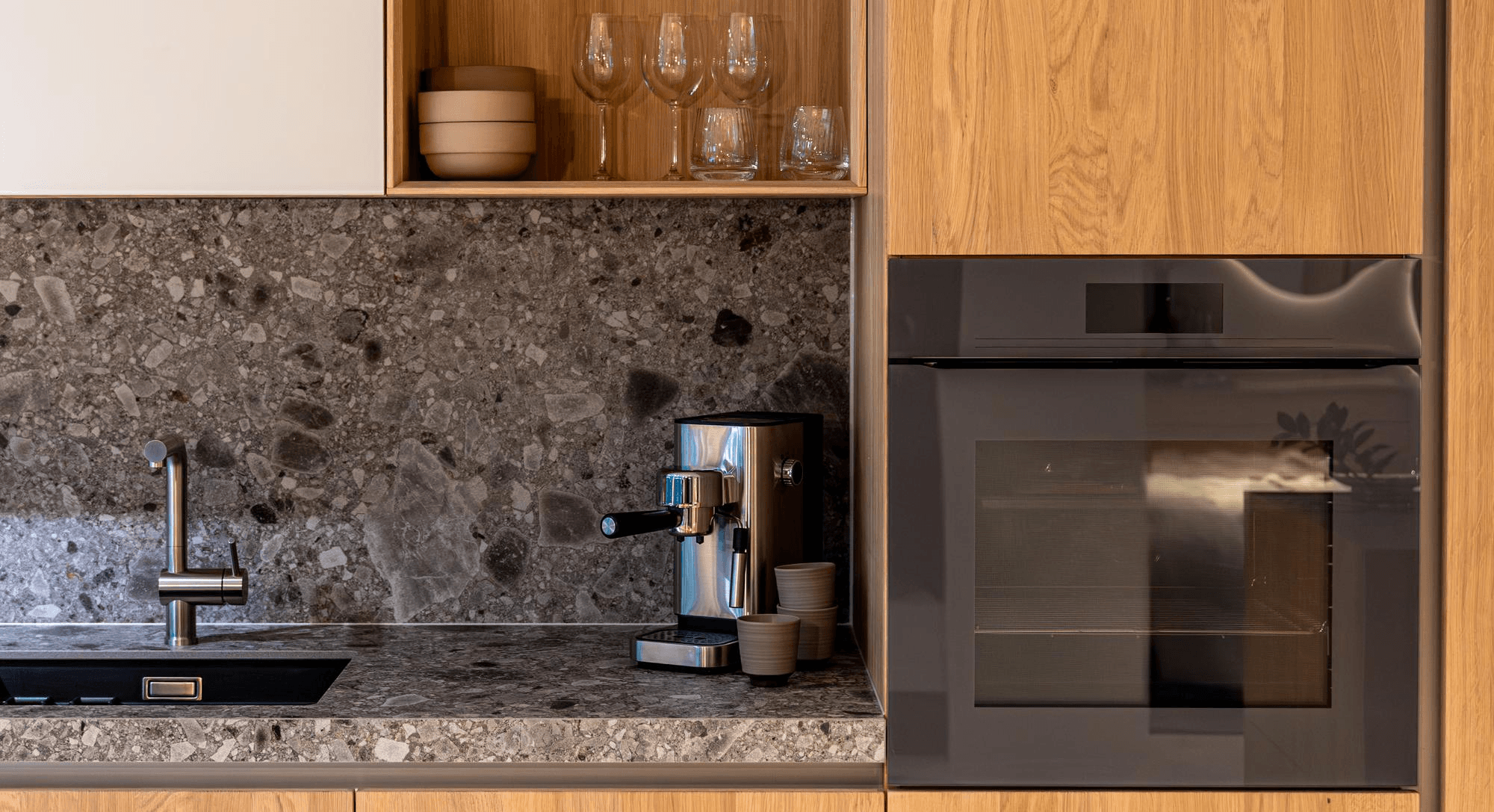
Hard water can leave cloudy marks, white mineral buildup, and stubborn spots around sinks, faucets, and wet prep areas. These marks can make granite countertops look dull even when the stone itself is still in good condition.
Granite is durable, but the wrong cleaning products can damage the surface or weaken the sealer. Acidic cleaners, abrasive pads, and harsh chemicals can create more problems than they solve.
This guide explains why mineral stains happen, how to prepare the surface, how to clean safely, and what products to avoid. East Coast Granite of Upstate can also help homeowners care for stone countertops and protect their investment.

Why Does Hard Water Stain Granite?
Hard water contains dissolved minerals, usually calcium and magnesium. When water dries on the stone, those minerals can remain behind as a cloudy film or white buildup.
These marks often appear around faucets, sink edges, soap dispensers, and seams. Water collects in these areas more often, which increases the chance of buildup.
Many water spots are mineral deposits sitting on the surface or near the sealer. This means they can often be improved with careful cleaning.
If the sealer is worn or damaged, moisture may interact with the stone more easily. This can make marks harder to clean and increase the need for professional care.
What to Do Before Removing Hard Water Stains
Identify the Finish
Before cleaning, look at the granite finish. Polished, honed, and textured surfaces may respond differently to products and tools.
Remove Loose Debris
Wipe away crumbs, dust, and loose particles before treating the stain. This helps prevent scratching while cleaning.
Test the Cleaner First
Any cleaner should be tested in a small hidden area before use. This is especially important if the granite is older or the sealer condition is unknown.
Use Stone-Safe Products
Choose products labeled safe for natural stone. A gentle method is better than a strong product that may damage the finish.
Avoid Rushing
Mineral buildup should be treated gradually. Aggressive scrubbing can dull the surface or create scratches.
How to Remove Hard Water Stains From Granite
Start With Warm Water
Use warm water and a soft microfiber cloth to loosen light residue. Wipe gently and dry the surface completely.
Use a pH-Neutral Cleaner
For more persistent buildup, apply a pH-neutral granite-safe cleaner. Follow the product instructions and give it time to work.
Wipe Gently
Use a soft cloth or non-abrasive sponge. Do not scrub hard. The goal is to loosen the deposit without damaging the stone or sealer.
Rinse and Dry
After cleaning, rinse the area with clean water and dry it fully. Drying is important because standing water can create new marks.
Repeat if Needed
Some buildup may need more than one gentle treatment. Repeating a safe method is better than using a harsh shortcut.
How to Remove Stubborn Mineral Buildup
Use a Granite-Safe Cleaner
Thicker deposits may need a cleaner made for mineral buildup on stone. Always confirm that the product is safe for granite.
Try a Plastic Scraper Carefully
A soft plastic scraper may help loosen buildup when used gently. Keep the scraper flat and avoid digging into the surface.
Do Not Use Excessive Pressure
If the deposit does not lift, do not force it. Too much pressure can scratch the surface or damage the finish.
Know When to Call a Professional
If the marks remain after safe cleaning, professional stone care may be the best option. This is especially true for delicate finishes or damaged sealers.
What Not to Use on Granite
Avoid Vinegar and Lemon
Acidic cleaners can damage stone and affect sealers. Vinegar and lemon juice should not be used to clean granite.
Avoid Abrasive Powders
Scouring powders and rough pads can scratch or dull the surface. Even durable stone can be damaged by aggressive cleaning.
Avoid Steel Wool
Steel wool can leave scratches and may even create rust marks if particles remain behind.
Avoid Harsh Chemical Cleaners
Strong bathroom cleaners, bleach-heavy products, and unknown chemicals should be avoided unless they are specifically approved for granite.
Prevent Future Marks
Wipe spills promptly, dry around sinks, clean with stone-safe products, and seal when needed. These habits help protect granite countertops and reduce the chance of new water stains.
East Coast Granite of Upstate can provide guidance on granite care, sealer questions, maintenance routines, and replacement options when a surface is worn or damaged.
With the right cleaning method and simple daily habits, homeowners can safely remove soap scum, mineral buildup, and cloudy marks while preserving the natural beauty of granite.